
August 7, 2026

Concrete paving in Central Louisiana means installing driveways, patios, sidewalks, or parking lots using poured concrete slabs designed for the region's buckshot clay soil, heavy rainfall, and seasonal freeze-thaw swings. Done correctly, with proper subgrade prep, a 3,000 to 4,500 PSI mix, and correct joint spacing, a concrete surface here should last 25 to 30 years.
Key Takeaways
Your driveway is cracking again, and you're tired of guessing why. Maybe you poured a slab three years ago, and it's already splitting. Maybe you're planning a first patio and don't want to make the same mistake. Central Louisiana's soil and weather are not forgiving of shortcuts.
We've spent years pouring concrete across Pineville, Alexandria, and the surrounding parishes. We've seen what buckshot clay does to a slab poured on unstable ground. We've also seen what a properly built driveway looks like after two decades.
This guide walks you through concrete paving from the ground up. You'll learn how it works, what soil and climate problems to plan for, how much it costs, and how to pick a contractor who won't let you down.
Concrete paving is the process of pouring a mixed cement, aggregate, and water slab over a prepared base to create a hard, durable surface. It's used for driveways, patios, sidewalks, parking lots, and roads.
How Concrete Paving Works
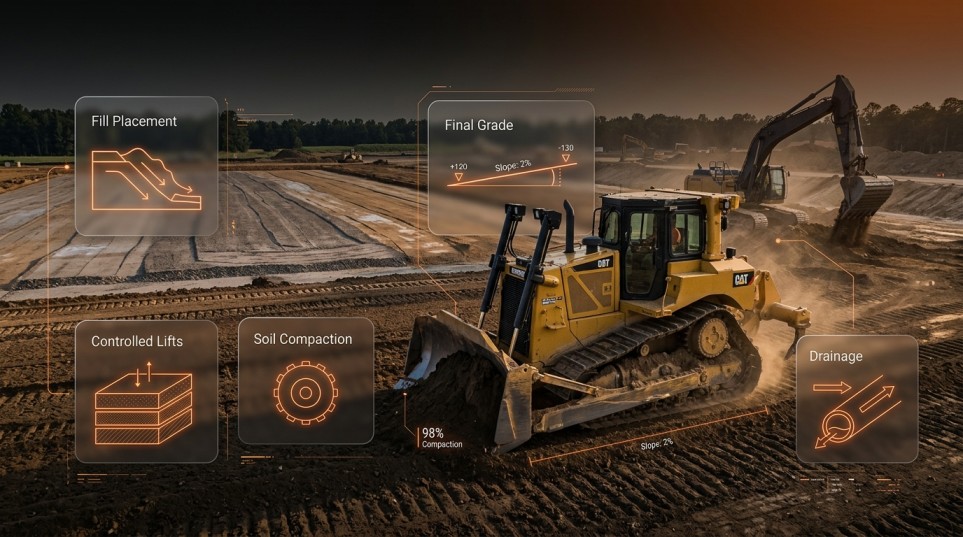
A contractor excavates the area, compacts the soil, and adds a gravel base. Forms are set to hold the shape. Wet concrete is poured, leveled, and finished before it hardens into a solid slab.
Common Residential and Commercial Applications
Homeowners use concrete for driveways, walkways, and patios. Businesses use it for parking lots, loading docks, and warehouse floors. Cities use it for roads, curbs, and sidewalks.
Benefits of Concrete Paving
Concrete resists heavy loads better than most paving materials. It holds up to vehicle traffic for decades with minimal upkeep. It also reflects heat, which matters during Louisiana summers, and it accepts stamped or colored finishes for curb appeal.
Why Concrete Is a Popular Choice in Central Louisiana
Homeowners here choose concrete because it stands up to heavy rain better than gravel or dirt. It also resists the rutting that asphalt develops in extreme summer heat. For many properties, it's simply the lowest-maintenance option available.
Concrete's strengths only show up when it's matched to local ground conditions, and that's where things get more complicated here than in most states.
Central Louisiana's soil and climate create specific stress points that don't exist everywhere. Ignoring them is the fastest way to end up with a cracked driveway in under five years.
Heavy Rainfall and High Water Tables
This region gets significant annual rainfall, and water tables sit close to the surface in many areas. Poor drainage planning lets water pool under a slab, which softens the base and leads to sinking or heaving.
Buckshot Clay and Expansive Soil Conditions
Buckshot clay is a heavy, dense clay common across Central Louisiana that swells when wet and shrinks when dry. This constant movement puts pressure on concrete from below, and it's the leading cause of early cracking in the region.
Heat, Humidity, and Seasonal Weather Changes
Summer heat speeds up curing time and can cause surface cracking if the concrete dries too fast. Contractors here often adjust pour schedules and use curing compounds to slow moisture loss during hot months.
Freeze-Thaw Cycles and Their Impact on Concrete
Central Louisiana sees occasional hard freezes, not constant ones. Even a handful of freeze-thaw cycles each winter can crack concrete that lacks proper air entrainment, so this detail still matters even in a mild climate.
These four factors shape almost every decision that follows, from the mix you choose to how thick your slab needs to be.
Not all concrete surfaces are built the same way. The right type depends on your budget, use case, and how much visual style you want.
Standard Concrete Pavement
This is a plain gray, broom-finished slab. It's the most affordable option and works well for driveways, sidewalks, and utility areas.
Reinforced Concrete Pavement
Reinforced concrete includes steel rebar or wire mesh inside the slab. This adds tensile strength and reduces cracking, especially useful on Central Louisiana's shifting clay soil.
Stamped Concrete
Stamped concrete uses textured molds to mimic brick, stone, or tile. It's popular for patios and walkways where homeowners want a decorative look without the cost of real pavers.
Colored Concrete
Pigments mixed into the concrete or applied to the surface create custom colors. This works well for patios, pool decks, and driveways that need to match a home's exterior.
Exposed Aggregate Concrete
This finish removes the top layer of paste to reveal the stone aggregate underneath. It offers strong slip resistance, which makes it a good choice for pool decks and walkways.
Decorative Concrete Finishes
Beyond stamping and color, options include scoring, staining, and polishing. These finishes let homeowners and businesses customize concrete without switching to a more expensive material.
Once you know which type fits your project, the next question is where you'll actually use it.
Concrete shows up in nearly every type of property in this region, from a single-family driveway to a full commercial lot.
Residential Driveways
Driveways are the most common residential concrete project. They need adequate thickness and proper joint spacing to handle the daily vehicle weight on clay soil.
Sidewalks and Walkways
Sidewalks are thinner than driveways since they don't carry vehicle loads. They still need a compacted base to avoid settling.
Patios and Outdoor Living Spaces
Patios often use stamped or colored finishes. Central Louisiana's outdoor living season is long, so drainage away from the home matters even more here.
Commercial Parking Lots
Parking lots require thicker slabs, proper slope for drainage, and often reinforcement to handle constant vehicle traffic and occasional heavy delivery trucks.
Industrial Facilities
Warehouses and industrial sites need high-PSI concrete capable of supporting forklifts, machinery, and heavy racking loads without cracking.
Municipal Roads and Public Infrastructure
Public roads and infrastructure projects follow Louisiana DOTD specifications for thickness, mix design, and reinforcement, which are stricter than typical residential standards.
Every one of these project types starts the same way: with careful planning before a single shovel hits the ground.
Good planning prevents most of the problems that show up later. Skipping this step is where budget overruns and premature cracking usually begin.
Evaluating the Site
A contractor should walk the site to check grade, existing drainage patterns, tree roots, and access for equipment before giving a final quote.
Planning for Drainage
Water needs somewhere to go. Central Louisiana's flat terrain and high water table mean drainage planning isn't optional; it's the single biggest factor in whether your slab survives the next decade.
With the site evaluated and drainage mapped out, the actual installation process can begin.
Installing concrete correctly involves several distinct stages. Skipping or rushing any one of them shortens the life of the finished surface.
Excavation and Site Preparation
Crews remove topsoil, grass, and debris down to a stable base layer. This step also sets the finished grade and slope for drainage.
Subgrade Preparation and Compaction
The exposed soil gets compacted with mechanical equipment to reduce future settling. On buckshot clay, this step needs extra attention since loose clay compacts poorly when wet.
Soil Stabilization Methods
When native soil is too weak or reactive, contractors stabilize it before pouring.
Installing Forms and Reinforcement
Wood or metal forms shape the slab's edges. Rebar or wire mesh goes in next if the design calls for reinforcement.
Pouring the Concrete
Ready-mix concrete arrives by truck and gets poured into the forms. Crews work quickly here, especially in summer heat, since concrete begins setting within a couple of hours.
Finishing the Surface
Workers screed the surface flat, then apply the chosen texture, broom, trowel, stamp, or exposed aggregate, before the concrete fully sets.
Joint Placement and Saw Cutting
Control joints get cut into the slab at planned intervals. These joints guide where the concrete will crack as it shrinks, keeping cracks straight and controlled instead of random.
Final Inspection and Cleanup
Once the slab cures enough to walk on, crews remove forms, clean the site, and do a final check for surface defects before handing the project back to you.
Getting the installation right depends heavily on following established thickness and reinforcement standards, which is the next piece of the puzzle.
Industry standards exist because they've been tested against real-world failure. Following them protects your investment.
Most residential driveways need a minimum of 4 inches of concrete. Heavier vehicles like trucks or RVs, or driveways on poor soil, call for 5 to 6 inches. According to the American Concrete Institute, increasing thickness by just one inch can raise load capacity by roughly 50 percent (Source: American Concrete Institute guidance cited in industry driveway standards). Commercial lots typically need 6 to 8 inches.
Wire mesh works for standard residential slabs. Rebar offers stronger crack control and is recommended on Central Louisiana's clay soil, especially for driveways over 5 inches thick.
A general rule places control joints at a distance in feet equal to two to three times the slab's thickness in inches. A 4-inch slab typically needs joints every 8 to 12 feet.
Slabs should slope away from structures at roughly a 1 to 2 percent grade. This moves water off the surface fast enough to prevent pooling, which matters more here given the region's rainfall totals.
With the structural standards set, the next decision is which concrete mix actually fits your project and climate.
The mix design determines how well your slab resists cracking, weather, and daily wear. Getting this wrong is an expensive mistake to fix later.
PSI (pounds per square inch) measures how much compressive force concrete can handle before it fails. Standard residential driveways typically use 3,000 to 4,000 PSI, while commercial and industrial applications often call for 4,000 to 5,000 PSI or higher.
Air-entrained concrete contains microscopic air bubbles that give trapped water room to expand during freezing. Even in Central Louisiana's mild winters, this feature helps prevent surface scaling from the region's occasional hard freezes.
Synthetic fibers mixed into the concrete reduce plastic shrinkage cracking during the first hours after a pour. They work well as an added layer of protection alongside rebar, not as a replacement for it.
For most Central Louisiana homes, a 3,000 to 4,000 PSI air-entrained mix with a maximum 0.45 water-to-cement ratio balances cost and durability well. Heavier-use driveways or commercial sites should move toward the higher end of that range.
Choosing concrete is only half the paving conversation. The other half is deciding whether concrete is even the right material compared to asphalt.
Both materials pave a driveway or lot, but they perform very differently in Central Louisiana's climate.
Installation Differences
Concrete takes longer to cure before use, often a week or more, while asphalt can typically handle light traffic within a day or two.
Cost Comparison
Asphalt usually costs less upfront. Concrete costs more initially but often costs less over its full lifespan due to lower maintenance needs.
Durability and Lifespan
Concrete generally lasts longer, often 25 to 30 years, versus 15 to 20 years for asphalt, particularly under Louisiana's heat, which softens asphalt over time.
Maintenance Requirements
Asphalt needs resealing every few years. Concrete needs far less frequent sealing and generally holds up better to Louisiana's heavy rain and UV exposure.
Which Option Is Best for Your Property?
If you want the lowest upfront cost and don't mind regular resealing, asphalt can work. If you want fewer repairs over 20-plus years, concrete is usually the stronger long-term investment for this climate.
Whichever material you choose, none of it performs well without proper curing, which is where a lot of driveways go wrong.
Curing is often rushed, and it's one of the most common reasons concrete underperforms its expected lifespan.
Why Proper Curing Matters
Concrete gains strength as it cures, not just as it dries. According to industry research, concrete that cures in open air can end up only half as strong as concrete kept properly moist during the process (Source: ACI-referenced curing research).
Preventing Moisture Loss
Contractors apply curing compounds, wet burlap, or plastic sheeting to slow evaporation, especially critical during Central Louisiana's hot, humid pour seasons.
Achieving Maximum Strength
Concrete reaches roughly 70 percent of its design strength within the first week, but full strength can take up to 28 days. Temperature swings during that window directly affect final hardness.
When Concrete Is Ready for Use
Foot traffic is generally safe after 24 to 48 hours. Vehicles should stay off for at least 7 days, and full curing typically takes about a month before the slab reaches its rated strength.
Even a properly cured slab can still develop problems over time, so it helps to know what to watch for.
Most concrete failures trace back to one of a handful of root causes, nearly all preventable with the right upfront choices.
Even with good maintenance, every slab eventually shows signs that repair or replacement is coming.
Catching these signs early usually means a cheaper repair instead of a full replacement.
Knowing when a slab is failing naturally raises the question of how long a well-built one should last in the first place.
With correct installation and reasonable upkeep, most concrete pavement in this region performs well for decades.
Lifespan expectations are only useful once you know what the investment actually costs upfront.
Cost varies more than most homeowners expect, largely based on site conditions unique to this region.
Getting fair, accurate pricing depends heavily on who you hire, which is where most homeowners spend the least time researching and regret it most.
The contractor matters more than the concrete itself. Even a good mix fails under poor workmanship.
Experience With Central Louisiana Soil and Climate Conditions
A contractor who's worked with buckshot clay knows how to prep a subgrade that will actually hold up, not just look right on pour day.
Licensing and Insurance
Always confirm active licensing and liability insurance before signing a contract. This protects you if something goes wrong during the project.
Quality Control and On-Site Testing
Reputable contractors test slump and air content on delivery day rather than trusting the batch plant's paperwork alone.
Equipment and Workmanship
Proper compaction equipment, laser-guided grading, and experienced finishing crews all directly affect how long your slab lasts.
Warranty and Customer Support
A written warranty covering cracking and settlement shows a contractor stands behind their work beyond just the day of the pour.
Questions to Ask Before Hiring
Ask about their experience with clay soil, their standard PSI and thickness for your project type, their joint spacing plan, and whether they carry insurance. A contractor who answers clearly and specifically is usually the safer choice.
Hiring the right contractor also means understanding the local rules they're required to follow.
Permitting and code requirements vary by parish, and skipping this step can delay or even halt a project.
Louisiana DOTD Guidelines
Projects tied to state roadways or public right-of-way must follow the Louisiana Department of Transportation and Development specifications for mix design, thickness, and drainage.
Local Building Codes and Permit Requirements
Most parishes require permits for driveway and patio installations above a certain size. Checking with your local building department before work starts avoids costly rework.
ADA Considerations for Commercial Projects
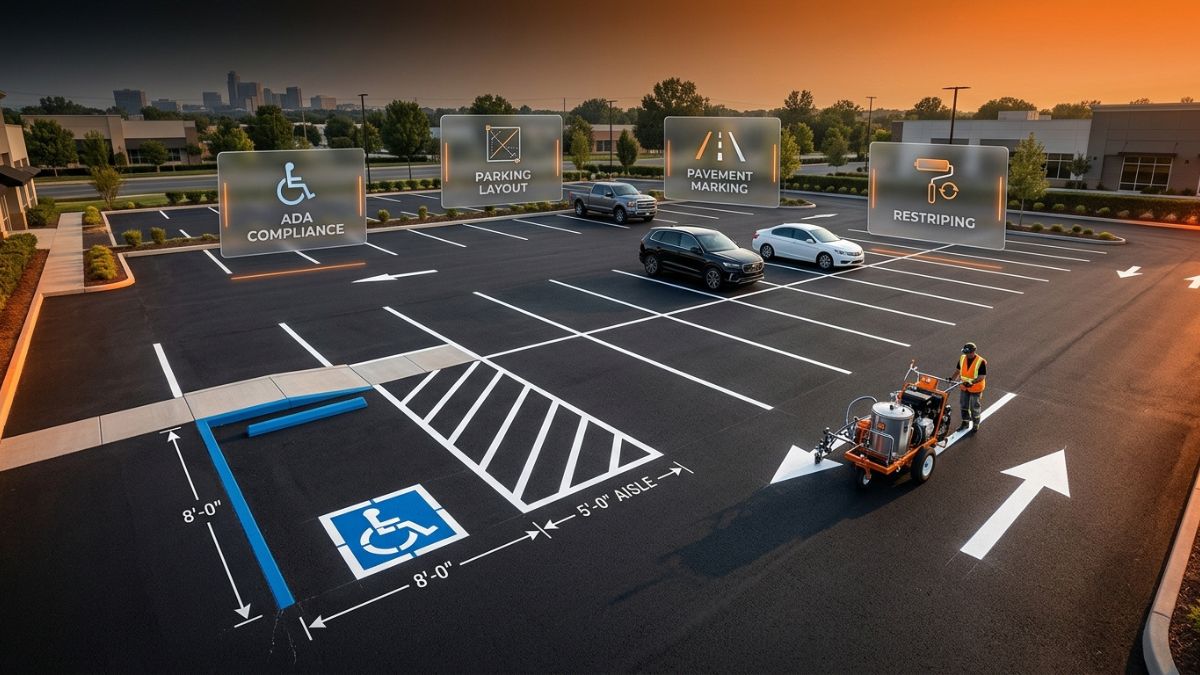
Commercial sidewalks and ramps must meet ADA slope limits, a maximum running slope of 5 percent and a maximum cross slope of 2 percent (Source: U.S. Access Board, ADA Standards for Accessible Design). Missing this by even a fraction of a percent can trigger a required report.
Understanding the rules is one thing. Understanding why local knowledge matters in applying them is another.
Generic paving advice doesn't account for what actually happens in Central Louisiana's ground and weather.
Familiarity With Local Materials and Suppliers
Local contractors know which ready-mix suppliers deliver consistent batches and which aggregate sources perform best in this region's conditions.
Working With Local Industry Standards
A contractor familiar with parish permitting and DOTD requirements moves projects through approval faster, with fewer surprises along the way.
That local knowledge is exactly what separates a driveway that lasts three decades from one that needs replacing in five.
Precision Blacktopping LLC has built its reputation in Pineville and across Central Louisiana on understanding this ground better than out-of-area competitors. We've stabilized buckshot clay subgrades, poured driveways rated for the region's rainfall, and repaired more failed slabs than we can count, most of them failures we could have prevented from the start.
If you're planning a driveway, patio, or commercial lot, the details in this guide are exactly what we walk through with every client before we quote a project. Getting the mix, thickness, and drainage right the first time costs far less than fixing it later.
We'd rather spend an extra hour on your site evaluation than hand you a slab that cracks in three years. That's the difference proper planning makes, and it's the standard we hold every project to.
Spring and fall offer the most stable temperatures for pouring and curing. Summer pours are possible but require extra care to prevent fast moisture loss in the heat.
Standard residential driveways need a minimum of 4 inches. Driveways handling trucks, RVs, or built on soft soil should use 5 to 6 inches for added durability.
Wait at least 7 days before driving on new concrete, even though it may be safe to walk on within 24 to 48 hours.
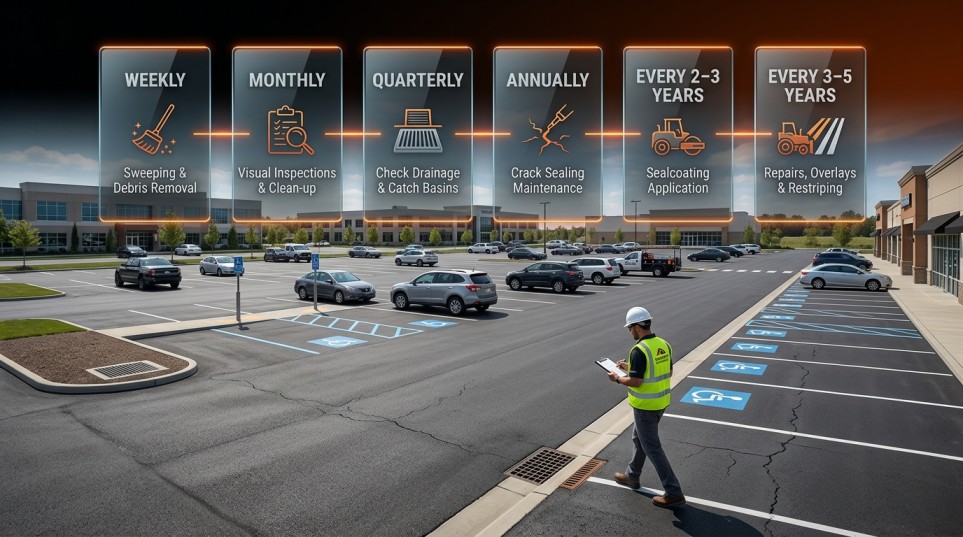
Yes. Sealing every 2 to 3 years protects concrete from moisture, UV damage, and staining, extending its lifespan significantly.
Cracking most often comes from soil movement, inadequate thickness, poor joint spacing, or curing that happened too fast in hot weather.
Concrete generally lasts longer and needs less maintenance than asphalt in this climate, though asphalt costs less upfront. The right choice depends on your budget and timeline.
Plan on resealing every 2 to 3 years, along with prompt crack repair and seasonal cleaning to keep joints clear of debris.
Look for licensed, insured contractors with direct experience handling buckshot clay soil, a clear warranty, and a willingness to explain their mix and thickness recommendations in detail.
Concrete paving in Central Louisiana demands more planning than most homeowners expect, but the payoff is worth it. Buckshot clay, heavy rainfall, and seasonal freeze-thaw swings all shape how a slab performs over time. Getting the mix, thickness, drainage, and curing right the first time is what separates a driveway that lasts three decades from one that cracks within five years.
Throughout this guide, you've seen how soil stabilization, proper joint spacing, and the right PSI rating work together to protect your investment. You've also seen how much a contractor's local experience matters; someone who understands this region's ground conditions catches problems a generic crew would miss. None of these details is an optional extra; they're the foundation of a slab that actually holds up.
We built Precision Blacktopping LLC around exactly this kind of local expertise, and we've seen firsthand what happens when these steps get skipped. If you're planning a driveway, patio, or commercial paving project anywhere in Pineville or Central Louisiana, we're ready to walk your site, answer your questions, and give you a straightforward quote. Reach out to Precision Blacktopping LLC today to get your concrete paving project started the right way.